Which Language Should I Translate My Book Into First?
Choose the first translation language based on where your book has the strongest chance of finding readers, not simply which language has the most speakers. A good first market is one you can translate, package, publish, and learn from without spreading your budget or attention too thin. For most Bookshift users, that language is German.
Quick Answer: How to Choose a First Translation Market
For many independent authors, a practical first choice is a market where:
- Your genre already sells well.
- You already have reader signals, comparable authors, newsletter subscribers, ad data, or personal knowledge.
- You can publish and manage the store listing.
- Your title, blurb, keywords, categories, and cover text can be localized.
- You have enough credits to translate the full book.
- You are willing to review the edition before launch and monitor performance afterward.
If you already know your target market, start there. If you are comparing options, use the Translate by Language Hub and Publishing by Market Hub to narrow the decision.
Use This Decision Framework
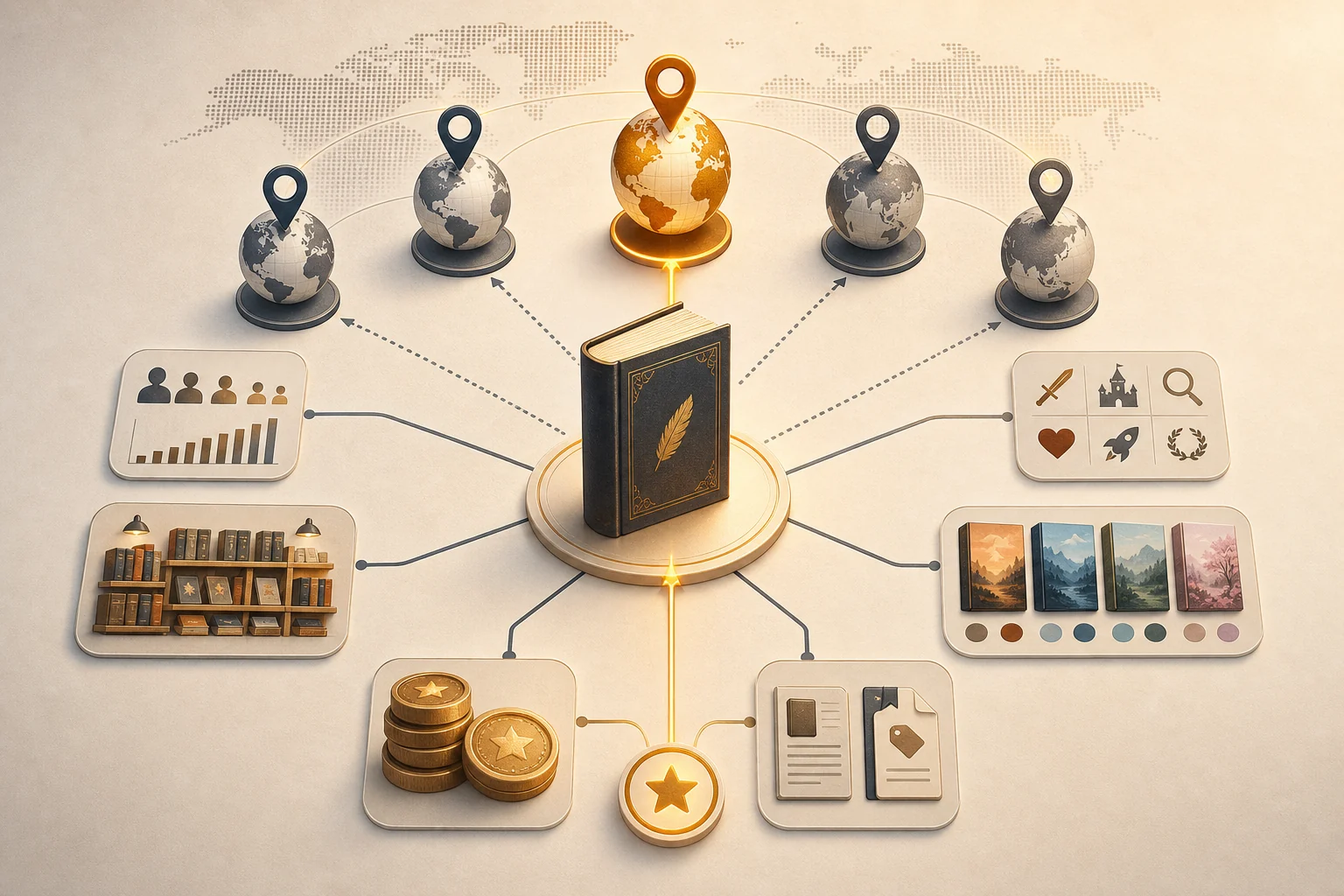
Score each candidate language from 1 to 5 on the factors below. The highest score is not always the automatic answer, but it will show which choice is practical instead of only attractive.
| Factor | What to ask | Why it matters |
|---|---|---|
| Genre fit | Do readers in this market buy books like yours? | Translation works better when the target market already understands the genre promise. |
| Existing reader signals | Do you have sales, reviews, newsletter subscribers, ad clicks, or reader messages from that market? | First-hand signals reduce guesswork. |
| Budget fit | Can you translate the whole book and still afford cover, metadata, proofing, and launch work? | A partial launch rarely teaches you much. |
| Launch complexity | Can you manage the store listing, tax/payout requirements, categories, and files? | Publishing friction can delay or weaken the launch. |
| Metadata readiness | Can the title, subtitle, blurb, keywords, and categories be adapted naturally? | A good translation still needs a market-ready listing. |
| Cover readiness | Can your cover text and design work in the target language? | Untranslated or cramped cover text can make the edition look unfinished. |
| Review plan | Can you review the output yourself, use a proofreader, or get native-speaker feedback? | Final quality control matters most when you are learning a new market. |
For a simple planning score, add the numbers and compare your top two or three languages. If one language has lower market appeal but much stronger launch readiness, it may still be the better first test.
Start with Genre Fit, Not Speaker Count
A language is not just a language; it is a reader market with its own genre expectations.
Ask:
- Do readers in this market buy books like mine?
- Are comparable authors publishing there?
- Does my cover style fit the market?
- Will the title and premise make sense culturally?
- Are my tropes familiar, or will they need careful positioning?
Romance, fantasy, thriller, LitRPG, nonfiction, and children's books can behave very differently across markets. Do not assume the best first language for one genre is best for another.
Check Your Current Reader Signals
Before choosing a language, look for evidence you already have:
- sales from international stores
- newsletter subscribers by country or language
- social followers who comment in another language
- ad clicks or search terms from non-English markets
- reader reviews that mention translation requests
- comparable authors publishing similar books in that language
These signals are not perfect, but they are better than guessing from population size. A smaller market with real signals can be a better first translation than a larger market you do not understand yet.
Choose a Language You Can Actually Launch Well
Translation is only one part of the workflow. You also need a localized title, blurb, keywords, categories, cover text, and publishing metadata.
Bookshift's translation workflow can provide translated manuscript files and marketing material for supported languages, but you still need to review the publishing setup and make final decisions. For the full submission process, see Translate a Book: Step-by-Step Walkthrough.
If your translated cover needs work, review Cover Translation Best Practices before launch. If you are still planning store copy, use the language guides in Translate by Language.
Estimate Credits Before You Commit
Your first language should fit your current credit budget. Estimate the translation before you commit:
Manuscript word count x 1 target language = approximate credits for first translation
If you are comparing several possible languages, estimate one language first, then decide whether to add more. See How to Estimate Credit Usage for Translating a Full Novel.
Also leave room for related publishing work. A strong translated edition may need proofreading, cover translation, metadata review, and file checks before publication. If your entire budget only covers manuscript translation, start with one language rather than several.
Common First-Language Paths
These examples are starting points, not guarantees of sales. Use them to think about readiness and localization work.
German First
German can be a strong first market for authors who are prepared to handle market-specific title, subtitle, cover, and publishing expectations. It is often a practical choice when you want a clear single-language test and you are willing to localize the full store package. If you are considering German, review Translate a Book from English to German and Publish a German Translation on KDP.
Spanish First
Spanish can be attractive because it reaches readers across multiple countries, but localization choices matter. Decide whether you want broad international Spanish or a more market-specific approach. A title, blurb, and keyword strategy should be chosen with the intended reader market in mind. Start with Translate a Book from English to Spanish and Publish a Spanish Translation on KDP.
French First
French may be a good first choice when your genre, tone, or readership has a natural fit with French-language readers and you can review the blurb and title for natural phrasing. French metadata should read like native sales copy, not a literal conversion of the English listing. See Translate a Book from English to French and Publish a French Translation on KDP.
Italian or Portuguese First
Italian and Portuguese can work well when you have a clear genre match, a manageable launch plan, and enough time to check longer translated title or subtitle text on the cover. These languages can need careful metadata editing because direct English marketing phrases may become too long or too literal. See Translate a Book from English to Italian and Translate a Book from English to Portuguese.
Korean or Japanese First
Korean and Japanese can be valuable, but they usually require more attention to title style, cover typography, metadata, and final review. Choose one of these first if you have a strong reason, such as genre fit, existing audience signals, or a clear publishing plan. See Translate a Book from English to Korean and Translate a Book from English to Japanese.
Start with the Market You Already Understand
If you already have readers, ads data, newsletter subscribers, or author contacts in a specific market, that can matter more than broad market size. First-hand knowledge reduces guesswork.
One Book or a Whole Series?
If you write a series, start with book one unless there is a special reason not to. Readers need a clear entry point before they continue through the series.
If book one performs well in the target language, you can translate the next books with more confidence. If the first launch struggles, you can improve the title, blurb, keywords, cover text, or review plan before investing in the rest of the series.
For series with complex names, worlds, or recurring terminology, prepare a style guide before translating. See Series Continuity for consistency planning.
Common Mistakes When Choosing a Translation Language
Do not choose by speaker count alone. Reader behavior, ebook adoption, genre demand, and publishing access matter.
Do not translate before the source book is ready. Finalize the source text first so you do not pay to translate scenes you later cut or rewrite.
Do not ignore cover localization. A translated manuscript with an untranslated cover is not a complete launch.
Do not launch too many languages at once unless you have the credits and time to launch each edition properly.
Do not treat metadata as an afterthought. The translated title, subtitle, blurb, keywords, and categories are part of the product.
Do not skip final review. Even a good first translation should be checked for names, tone, formatting, cover text, and store listing consistency.
FAQ
Should I Translate My Bestseller First?
Usually, yes. A book that already converts well in its source language gives you a better test than a book with unclear demand.
Should I Translate Into Multiple Languages at Once?
Only if you have the credits and time to launch each edition properly. Otherwise, start with one language and expand after you understand the workflow.
What If I Have No International Reader Data?
Use genre fit, comparable authors, launch complexity, and budget as your first filters. Pick one language where you can publish a complete edition, then treat the first launch as a controlled test. For most people, German is their largest foreign market and an excellent first choice.
Should I Choose the Cheapest Language?
For Bookshift manuscript translation, the main credit estimate is driven by word count and number of target languages. The bigger difference is usually launch effort: metadata, cover text, review, and publishing setup.
Should I Translate the Cover Before or After the Manuscript?
Bookshift will translate or generate a cover for you during its translation process. But if you would like to do that separately, you can use the cover translation tool.
Related Links
- Translate by Language Hub
- Publishing by Market Hub
- Translate a Book from English to German
- Translate a Book from English to Spanish
- Cover Translation Best Practices
- How to Translate a Book
- How Pricing Works
Next Action
Choose two or three possible target languages, score them against the decision framework above, then submit your book for translation.
 Menu
Menu